
Every story has roots.
Every character carries a truth. Every tale is someone’s reality.
✦
A note before the pages
This story is fiction. Mostly.
Like every work of fiction I’ve ever been drawn to, it carries fragments of truth between the lines. Not explanations, just small recognitions. Things that hurt. Things that shape us. Things we learn to hide.
18 Days After is different from what I had written before. It still carries my sarcasm — mostly self-directed — that slightly sharp humor I use as a shield when things feel too heavy. But beneath it lies a reality many women know well, and rarely speak about openly.
This book did not come from a plan. It came from observation. From questions I never asked out loud. From moments that linger, even when we insist they no longer matter.
At its core, it is a story about friendship. The kind that stays when everything else falls apart. The kind that holds you upright when you no longer trust your own strength. True friendship.
It is also about abuse. Not only the visible, violent kind, but the quiet, suffocating one. The kind that erodes you slowly, until you almost forget who you were before it began.
And it is about a woman who believes she has reached the limits of herself, without realizing that something in her has already begun to move. She forgot how strong she was.
In some ways, the younger version of me was a Nikita: stubborn, loud, independent. Braver than she probably should have been. And yes, I could have lived parts of her story. In small ways, perhaps I already have. But I was lucky. I rose in time.
Loss stays with us.
Life does too. Not loudly. Not heroically.
Just enough.
We all have the strength to move on.
✦
Quotes
“Music, Nikita is infinite.”
“What does infinite mean?” I’d ask.
“It means it has no end. It’s not like this room, which goes from here to there. It keeps going, past where you can see, and further still, to where someone else can see what you can’t, and then another person further than that. Everything can be new.”
These memories…
Every yesterday becomes a memory and slips on its own into a decorated box, vivid, colorful, carefully sealed. Inside it are hundreds of smaller ones, each bearing a golden label: joy, sadness, shame, fear, pain, love, guilt. Some stand alone, pure as they were; others are mixed, tangled. Sometimes, when you search for your father’s face, sorrow comes out with it, the sorrow of losing him. That’s the tangled kind. And what you end up feeling depends on which one you pulled out first, because the second always hits harder.
If in a melancholy moment you summon the grief over your father’s absence, the warmth of his love rises with it and sweeps away all the other, purer recollections. It brings only the sweetest moments along. But no matter how hard you try, you cannot keep the wrong boxes closed. Those who hold the things you never wanted to remember. No matter how hard you try, you cannot sort the tangled memories from the pure ones. Perhaps you manage it for a while, but memory… memory cannot be tamed.
When you begin to lose the ability to choose wisely, when the darkness piles up, when the bitter fragments become too many, when they threaten the balance of your mind, you make new boxes. You give them names. You throw everything you remember. Beautiful things, ugly things. Everything. Locked. Buried. Forgotten.
And for a while, you rest. You’re fine enough to believe it will last.
Every disaster, every destruction, every pain, every downfall has its own way of unfolding.
Sometimes it strikes when you least expect it, and other times it comes slowly, leaving its marks before it fully arrives. Traces in your life.
Whether many or few, they are there. If you’re paying attention, if you gather them up… they become the things you remember when you’re down.
Every word, every gesture, every glance, every subtle trace that led you to this moment.
✦
Songs that breathe inside the book
Music has a way of slipping between the lines — these are the songs living inside the book.
✦
Can you find yourself in the characters?
Every story carries a reflection of someone — sometimes, it’s us.
Nikita
She loves speed, motorcycles, and anything that gives her the feeling of slipping into her own free world for a little while. She moves through life boldly and without apology, laughing loudly, often at herself. Social by nature, at ease in almost any group, she navigates people the way others navigate maps, instinctively. It’s a skill that serves her well in her work in the security services.
Her childhood friends became her family. The men she works with stand beside her not only professionally, but personally. Loyalty, for Nikita, is not a word she uses lightly. She shows up in moments of celebration, and in the brutal ones that follow.
She survives bad blind dates the way she survives most things: with humor, music, and the occasional night dancing on tables, gin or tequila in hand. She plays the guitar, listens to everything, and often lets melodies speak when words refuse to cooperate. She thinks deeply about love and devotion. She adores animals. She shares her space with a mischievous cockatoo who never misses a chance to provoke her.
And when everything collapses, she endures. She might take her time, but she rebuilds her world and finds a way to live inside it again.
As for the kitchen? Eggs, pasta, fries. That’s the full menu.
Rachel
She’s a free spirit too, sophisticated, restless, adventurous.
With a camera in hand, she travels the world in search of real images, not the surface ones, but the truths hiding behind the storefront glass.
She loves her friends deeply; she sees them as soul-sisters, even if their lives don’t always run parallel. Different from the other two, she is the catalyst between them: the calm one, the logical one, the one who observes and analyzes.
Rachel, the wise one.
Her work — noticing everything, reaching beneath the surface — has made her an exceptional judge of character. She sees beyond words, reads intentions, and refuses to bow to the stereotypes of “man, marriage, children.” She loves reading, different cultures, and the kind of travel that changes you a little every time.
Always composed and reserved, she opens up only to those who belong to her small, carefully chosen circle. To the family she built with her heart.
Irini
Eirini is a fashion devotee. Always polished, always immaculate, with every detail thought through, from shoes and gloves to the suitcase she takes on her trips.
Not a hair out of place, not a moment unconsidered.
She followed her first love to a city where she knew no one, choosing to build a life and a family from scratch, guided by the values she refused to compromise. Even when disappointment hit, she stayed loyal to what she believed in.
She’s the classic radiant soul: warm, innocent in a way that feels disarmingly so, a little naïve at times, and endlessly extroverted. She spreads smiles everywhere she goes, feels deeply, loves openly, and would walk through fire for the people she calls her own.
She adores art and culture; they fill her world, fuel her emotions, give her color, and comfort. She pours time, care, and resources into it because it’s part of the way she breathes.
Markos
Take away the difficult childhood — or maybe leave it there, because it shaped him — and what remains is a man who’s intense, layered, and unexpectedly bright. Clever, quick, and endlessly alive.
He’s a wonderful friend to those he calls his own; a whirlwind of fun for his circle. He spends freely, laughs loudly, and makes sure everyone around him has a good time.
He’s honest, open, easy to read, the kind of person whose emotions sit right under his skin. He’s successful, determined, and driven by goals he actually works for.
He lives life to the fullest, even though he knows something is missing… something that would make him feel whole.
And when he finds it? He wraps his world around it. He breathes through it.
Markos is the kind of man who loves once, deeply, fiercely, irrevocably.
(And yes, of course he’s a Scorpio.)
Yiorgos
Maybe it’s his physical presence, broad-shouldered, strong, the kind of man who looks like he could shield the whole world, but the truth is he would have been the same no matter his body.
Protective, warm-hearted, and instinctively reliable. He’s a leader: smart, careful, and relentlessly effective. A man with a deep, unwavering sense of duty; someone who loves his family fiercely and holds his friends with the same loyalty. He’s the one you run to when things fall apart, the one who gives you answers, clears the path, and stands over you like a mother hen disguised as a linebacker. His character is incorruptible, anchored in honesty and quiet strength.
And beneath all that steady seriousness, there’s a spark: quick wit, dry humor, and — fine, let’s admit it — a touch of classic masculine mischief.
James
He is brilliant in the quiet, disciplined way that leaves an impression long after he’s gone.
Methodical, successful, and steady, he’s the kind of man who carries calm with him, a silent force shaped by purpose rather than ego.
He grew up knowing he would step into a legacy, and he did so with ease and genuine pleasure.
He has goals, he has vision, and he turns both into reality with the same precision he brings to medicine, a profession he chose because it lets him give something back to the world. Beneath all that calm lies a quiet, unwavering confidence. Not the noisy kind, but the type built from work, mastery, and the certainty that he can meet whatever he sets his mind to. He is a man with high standards, and he has reached every one of them, not by luck, but by intention. He values his family deeply.
He marries off his sisters with pride, offers stability whenever it’s needed, and gives his mother the peace she’s always sought, even from afar. He takes care without announcing it. He supports without demanding anything in return.
He is alone, but never lonely. His life has been full of experiences gathered quietly, within the soft rhythm of a well-lived, understated, almost cosmopolitan existence. He is, after all, a man at the top of his field.
And when he sees the woman, the one, he knows. From that moment forward, with elegance, patience, and unwavering intent, he moves toward her the only way he knows how: calmly, respectfully, persistently… with the kind of devotion that doesn’t raise its voice to be believed.
Dimitra
The mother… She is one of the quiet pillars of the story, a woman who endured fear, silence, and violence for longer than anyone should. Not because she was weak, but because she was terrified of losing everything that mattered: her life, her standing, her child.
When she finally broke free, she didn’t collapse. She rebuilt. She turned her pain into steadiness, into tenderness, into the kind of love that becomes a lighthouse for a child who needs a safe harbor. And in that love, she made room for the woman who made her son happy.
Because that is what mothers do: they expand. They shelter. They hold the world together quietly, without applause.
She carries her scars with grace, heals in silence, and forgives in ways no one ever taught her to. And like all mothers, somewhere deep in her heart lies a soft apology for the child who drifted, who stumbled, who pulled away without meaning to. She will wait for the return anyway. With an open door and a wide open heart. She is a mother
In how many of these did you catch a small reflection of yourself?
✦
The Zodiac Lens
Not only by birth — but by energy

Nikita — Leo
A blaze that walks on two legs.
Nikita lights a room simply by walking into it. Extroverted, magnetic, reckless in the ways that make life feel real, she is the spark in every crowd. She moves fast, laughs hard, takes risks as if motion were survival.
And beneath the brilliance lies a quiet truth: she wants to be seen, not admired, but understood.
Why Leo: Because she carries light, even when she doesn’t want to show it.

Markos — Scorpio sun, Aries rising
Loud fire wrapped in water.
Deep-feeling, fiercely loyal, impulsively protective. Markos loves with intensity that borders on devotion, and he never gives only half of himself.
Why Scorpio: Because his love is always absolute

Yiorgos — Taurus
Unshakable. Protective. Built from bedrock.
Grounded, steady, the calm in every storm. Yiorgos anchors others simply by standing where he is.
Why Taurus: Because he is the ground beneath everyone else’s feet.

Rachel — Sagittarius moon in a Virgo world
Restless spirit, razor-sharp clarity.
Her intuition is Sagittarius; her mind is Virgo, bold yet analytical, untamed yet precise. She sees beneath the surface with both instinct and intellect.
Why this mix: Because she thinks with precision and feels with fire.

Eirini — Libra
Harmony, softness, beauty in every detail.
She balances without effort, soothes without trying, and sees the good when others see the chaos.
Why Libra: Because she is calmness in human form.

Dimitra — Cancer
The safe harbor.
She understands before you speak, comforts without asking for anything back, and fills spaces with quiet emotional warmth.
Why Cancer: Because she makes room for others inside herself.

James — Scorpio sun, Capricorn rising
Quiet storms, steady hands.
Born on the same day as Markos, shaped by a different sky. His strength is silent, strategic, disciplined, the kind that notices everything and reveals nothing.
Why Scorpio: Because his depth is a calm sea, not a wave.
✦
The real thing
Half of the story takes place on a small island in the Aegean Sea opposite Paros. Its name, Antiparos, literally means “the island opposite Paros” — a place defined not by what it is, but by what it sees. A small, beautiful island that you can drive around in an hour, but it is so full of life.
The Saloon Bar at 18 Days After was inspired by the Lucky Luke bar in Antiparos. It is just as it is described in the story — a small, tiny bar in the town’s central square, where the nights last until morning. Next door is The Doors, an authentic rock bar dedicated to Jim Morrison.
The unit referred to 18 Days After as S.O.F., the elite unit of the Greek Police, is fictional. However, the Greek Police counterterrorism unit is officially
called EKAM (Special Suppressive Counterterrorism Unit). To this day, only one woman serves in its ranks.
Ekali, where Markos’ house is located, lies outside the dense urban core of Athens, in the city’s northern suburbs. Along with the Athenian Riviera, it is considered one of the most affluent and aristocratic areas of the capital.
Bouzoukia remain the most popular form of nightlife in Greece, across all ages. The country’s biggest music stars are not pop artists, but laiké singers. And yes, women climb on tables and chairs to dance tsifteteli (or karsilama) at every opportunity. And the men—who want more space—dance zeibekiko (on the floor or the dance floor). And no, they don’t break plates anymore. Just throw flowers, tons of them.
After a night at the bouzoukia, tradition calls for soup. It’s where Nikita took James after they left the bouzoukia within the first hour of their meeting.
On the edges of the city’s nightlife districts, small restaurants stay open until morning, serving nothing but soup — believed to soothe the stomach after alcohol and sleeplessness, before finally going home to sleep. These places are known as late-night soup spots.
The city where Irini lives, Thessaloniki, is an amazing coastal city in northern Greece, about 500 km from Athens.
Lamia, the city where Nikita first met his father, is a provincial town located 200 kilometers north of Athens.
Around 140 km from Athens is the beautiful city of Nafplio, the place where Nikita finally came to terms with her ghosts.
✦ Domestic violence remains a widespread reality in Greece. On average, more than sixty women are reported as victims every single day. Over the years, tens of thousands of cases of violence against women have been officially recorded. Studies indicate that more than one in five women in Greece have experienced physical or sexual violence by an intimate partner. When psychological abuse is included, nearly half of all women report having lived through some form of violence. Domestic violence remains a widespread reality in Greece. On average, more than sixty women are reported as victims every single day. Over the years, tens of thousands of cases of violence against women have been officially recorded. Studies indicate that more than one in five women in Greece have experienced physical or sexual violence by an intimate partner. When psychological abuse is included, nearly half of all women report having lived through some form of violence.
✦
Topography
Notes, moments, and things I couldn’t leave out — even if they didn’t fit.
Athens, Nikita’s place
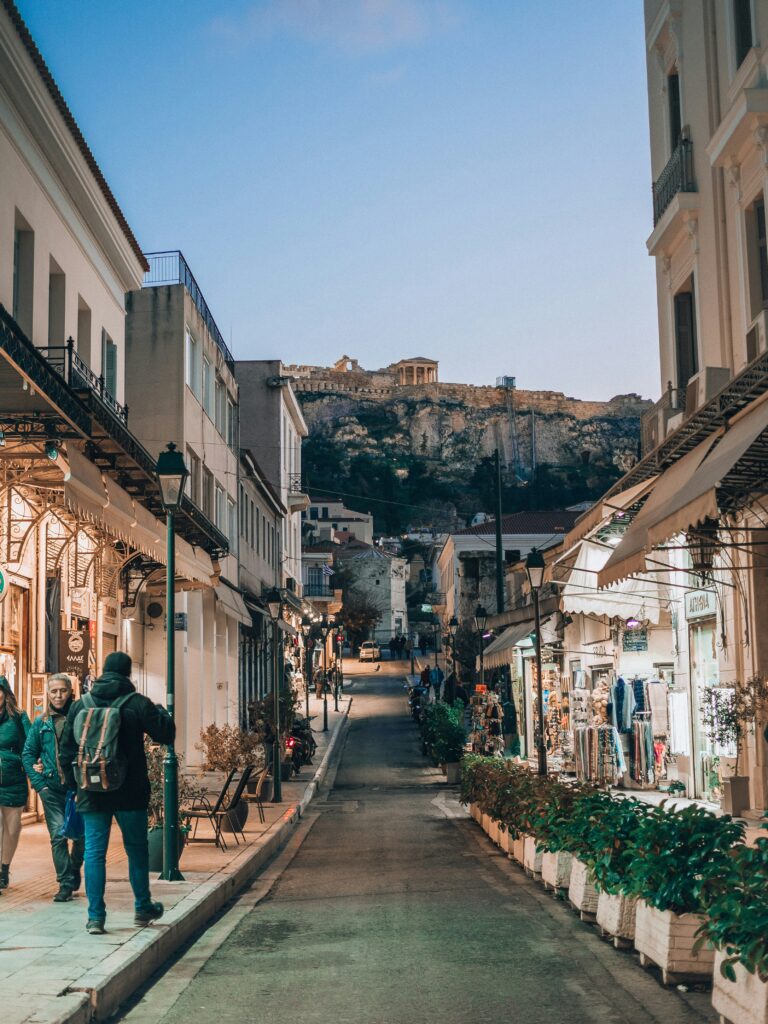
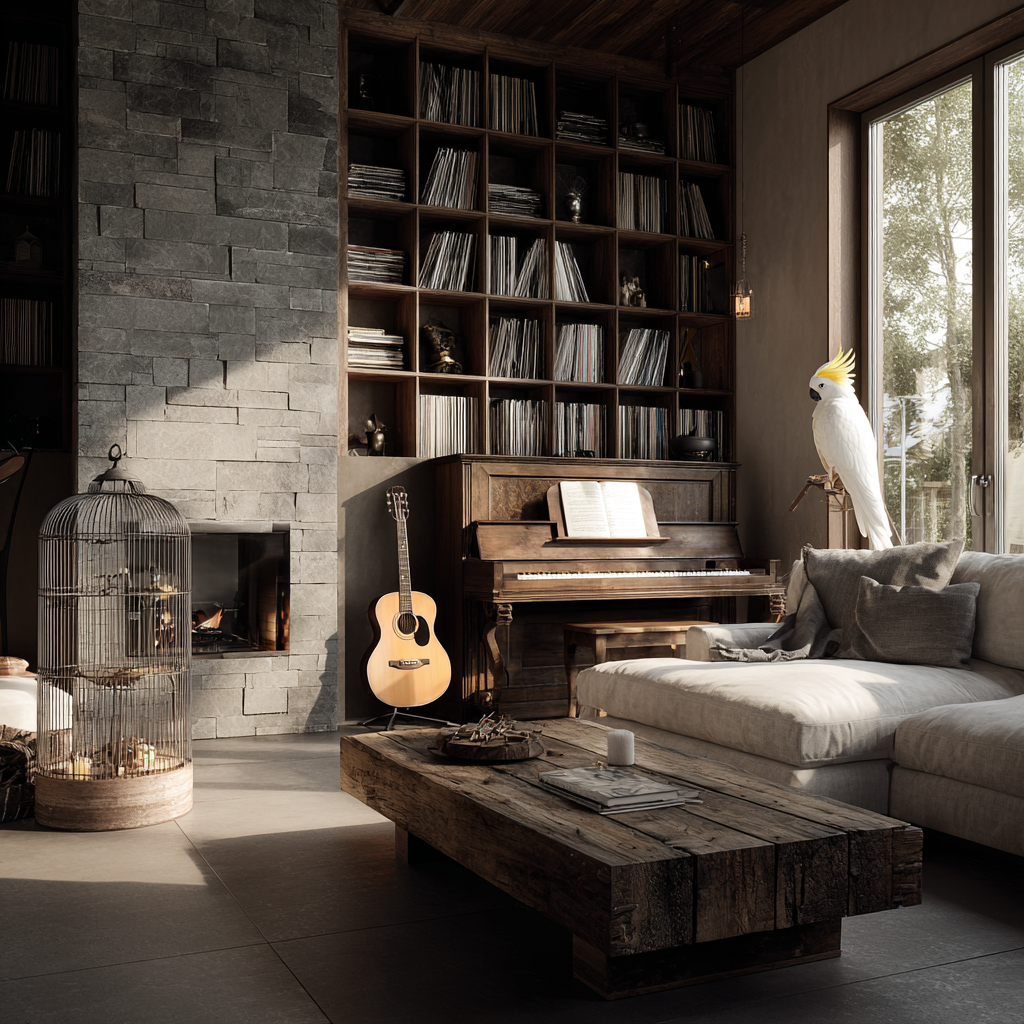
Antiparos. Pop’s small house, where love starts
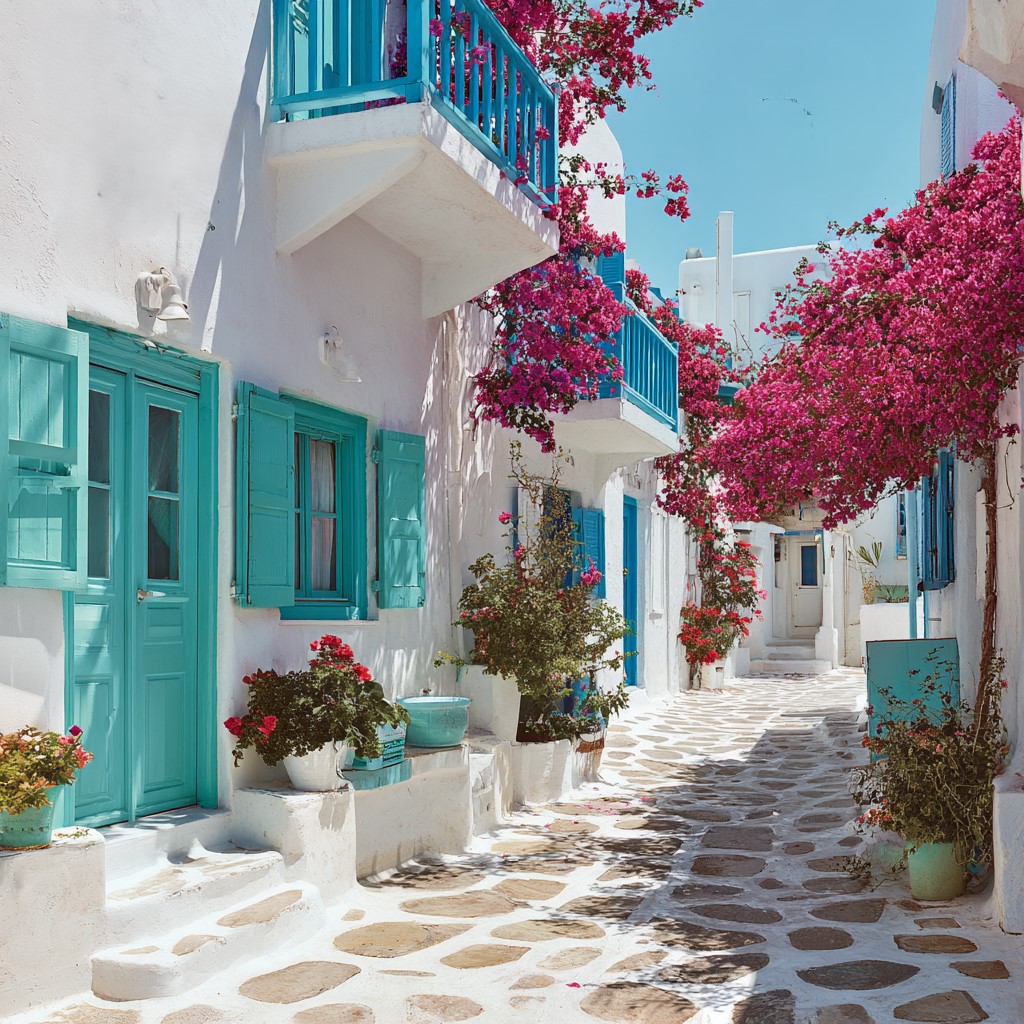
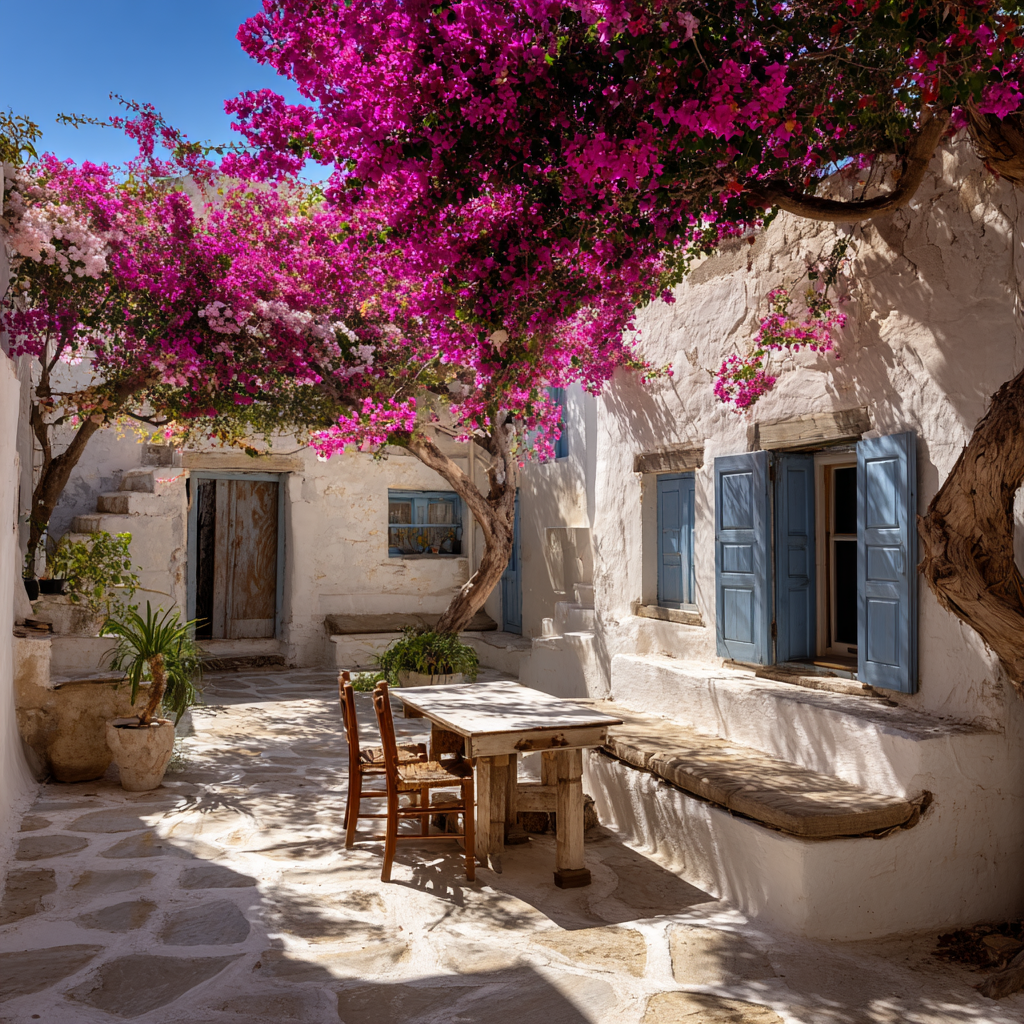
London, where James lived