Thriller
Pressure before impact
I don’t separate thrillers by subgenre.
Political, espionage, speculative, science fiction, horror — if the writing creates tension, it belongs here.
The goal is suspense. That steady pressure that keeps you turning pages, the feeling that something is about to break.
And I think everyone likes that. It’s not a love of fear. It’s safe suspense because it’s controlled. It begins and ends in two hours on a screen or until the last page of a book. It’s something that a successful story gives form to, but it ceases to be alive when the story ends.
Sometimes it’s fast and violent, other times the pressure is quiet and psychological, but the result is the same: the book won’t let you go. These are stories that play on your nerves, not on labels.
Different worlds, different stakes — one common pulse.
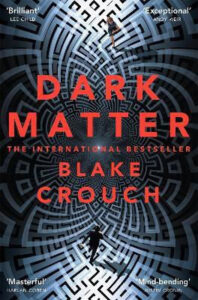
BLAKE CROUCH
Dark Matter
This is one of those books that doesn’t give you space. Nad oh my… Does not give you time to rest.
The writing is fast, sharp, and relentless. Short sentences, constant movement, a rhythm that keeps feeding you adrenaline. It pulls you forward and doesn’t really allow pauses, not because of tricks, but because of momentum.
I remember not wanting to put it down. Not because I needed to know “what happens next”, but because the book wouldn’t let go. It keeps tightening its grip, page after page, until you’re fully inside it.
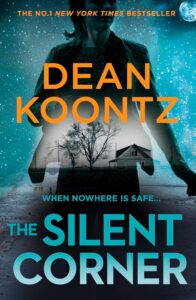
DEAN KOONTZ
Jane Hawk series
(The Silent Corner and onward)
Dean Koontz has been with me since the ’90s. Watchers was the first book of his I read, and I fell hard. Then came Lightning, Hideaway, Odd Thomas, The Eyes of Darkness, and almost everything that followed. I never stopped reading him.
His writing is… Dean Koontz. Fast, direct, emotionally charged, with that very specific rhythm that builds momentum without losing its soul. His books give me palpitations in the best possible way.
The Jane Hawk series, starting with The Silent Corner, carries everything I love about his work: relentless pace, conspiracy-tinged technology, and a constant sense of threat. But at its center stands Jane Hawk, arguably the strongest female character he has ever written. Intelligent, determined, and deeply human, she carries the weight of the story without ever becoming a symbol or a trope.
These books move fast, think sharply, and never let go.
Classic Koontz and one of his finest periods.
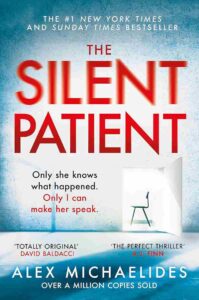
ALEX MICHAELIDES
The Silent Patient
One of the best psychological thrillers I’ve read.
Michaelides’ background in screenwriting shows clearly in the writing: direct, sharp, and tightly structured. Short chapters that push you forward, one after the other, until the story has you completely in its grip.
What stands out here is the narrative layering.
The diary of the murderer before the crime runs alongside the psychiatrist’s investigation in the present. The therapy sessions, the dialogues, and the way each scene is visualized are all precise and purposeful.
And then there is the ending.
The revelation arrives quietly, devastatingly, and redefines everything that came before. It’s unsettling, clever, and deeply satisfying.
ADRIAN McKINTY
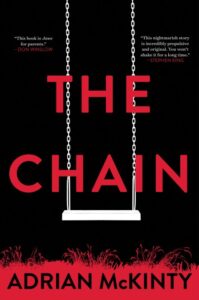
The Chain
This book moves like a machine gun.
No detours, no unnecessary explanations — it throws you straight into the terror of a mother trying to save her child.
With brutal clarity, McKinty forces the moral questions onto the page: What would you do to save the one you love?
And at what point do you become indistinguishable from the nightmare chasing you? The story runs on two parallel tracks: the race to recover the kidnapped child, and the slow unveiling of who stands behind the chain of crimes that keeps repeating itself. The tension never loosens. It accelerates.
I knew McKinty from his crime novels. This was something else entirely. Relentless, merciless, and impossible to put down.
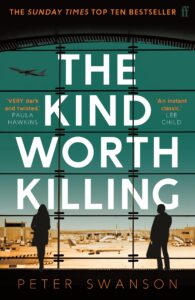
PETER SWANSON
The Kind Worth Killing
This is a book built on reversals. No one here is a good person, and the story never pretends otherwise.
Just when you think you understand who will kill whom, Swanson pulls the ground from under your feet and forces you to start again. And then again. The pleasure — if you can call it that — comes from realizing how willingly you follow him every time.
The multiple points of view keep shifting the balance, erasing certainty. The writing flows easily, contemporary and slightly dark, with a noir undertone that suits the moral landscape perfectly.
It’s clever without showing off, unsettling without excess.
And despite everything — or because of it — I couldn’t put it down.