Introspective Fiction
Books that question more than they answer
You know, I’ve caught myself increasingly seeking out books written by people who don’t think like us first, meaning, they don’t think in Greek or English. From Latin America, Eastern Europe, Asia, Africa… places where the language shapes the gaze differently.
There, what’s left unsaid is full because every culture carries its own way of shaping thought, ethics, and meaning. The rhythm of a sentence shifts the feel of time, of sorrow, of hope.
I’m drawn to that difference. I’ve grown almost addicted to it. I need it. It helps me understand myself better through how others see the same things so differently. That’s why this section isn’t just “foreign literature.” It’s my way of keeping my mind – and heart – open.
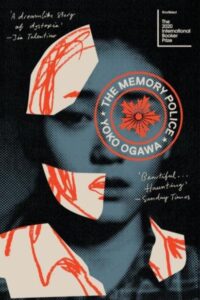
YOKO OGAWA
The Memory Police
This book is quiet, but it’s not gentle. Not even close to easy. Things disappear -objects, memories, whole ways of thinking- and people just… carry on. They adapt around the gaps with this eerie, almost polite calm. What really stayed with me wasn’t the disappearing itself. It was how quickly everyone stopped questioning it. How they learned not to ask anymore.
Ogawa’s writing is so spare, so clean -almost too clean- and that bare language makes the loss cut deeper. No theatrics, no hand-holding explanations.
After I finished it, I kept thinking: memory isn’t just personal. It’s fragile, collective, and when someone starts erasing it on purpose, systematically, it changes what being human even feels like.
It left me with this quiet unease I can’t quite shake.
MICHIKO AOYAMA
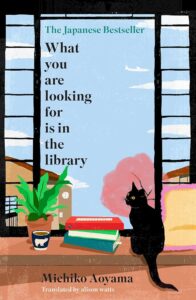
What You Are Looking For Is in the Library
What You Are Looking For Is in the Library grabbed me from the first page. Just like the title, in fact. Isn’t everything wonderful hidden in a library?
There are no great adventures or dramas; it’s for everyday people struggling with small and big things: jobs that no longer suit them, identity after change, loneliness in the city. And then suddenly, Sayuri Komachi appears, this slightly mysterious librarian who, without asking many questions, gives you a book that suits you perfectly. Αnd along with it something small, like a cat or a chocolate, that makes you feel less alone.
The writing is simple, clean, and without unnecessary embellishments. It doesn’t pull you by the sleeve to cry or get excited; it just lets you feel things slowly.
What I liked most was how much she believes that change doesn’t have to be spectacular. It’s enough to be seen, to be heard, to be given the right book at the right time.
If you’re looking for something to calm you down, make you think without tiring you, and remind you that books can be like friends, grab it. It’s not over the top, it’s just what you need.
VIKRAM CHANDRA
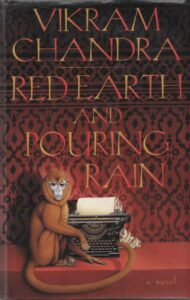
Red Earth and Pouring Rain
This book is like entering a world where stories never end, one begets another, myths, legends, history, all intertwined.
The Red Earth and Pouring Rain is one of those books that draws you in and doesn’t let you go easily. It begins with a monkey typing (yes, seriously) to save himself from death, and from there a chain of stories unfolds: Sanjay, a 19th-century poet in India, who experiences dreams, love, betrayal, colonialism, reincarnation, myths… and at the same time, three children in America who are searching for their identity. Everything gets mixed up —religion, history, myth, reality— until you no longer know where one begins and the other ends.
It’s not boring or academic. It’s lively, full of voices, humor, sadness, and beauty. Sanjay, this sensitive 19th-century Brahmin poet who loves words and art so much, became my friend. I felt sorry for him, I admired him, and I wanted him to keep talking.
By the end, I didn’t feel like I had finished a book. I felt like I had stepped out of a huge, magical circle of storytelling, and I already missed it.
If you want something that will transport you to other times and worlds, that will make you think about what it means to tell stories to stay alive, grab it. It’s one of the most unique books I’ve ever read.
TOSHIKAZU KAWAGUCHI
Before the Coffee Gets Cold
Tales from the cafe
Before your memory fades
Before We Say Goodbye
I never thought a tiny coffee shop in Tokyo could take me on a time trip – but these books did exactly that. The rules are tough: you can go back in time, but only for as long as your coffee stays hot, and nothing – absolutely nothing – can change the present. That strictness is what makes the stories hit so hard.
What stayed with me wasn’t the time travel itself. It was how much these characters just needed to be heard. To say the things they never said. To look someone in the eye and really understand them, even if it’s only for a few minutes.
Kawaguchi writes so simply, almost bare, no fancy words, no big drama. And that’s why the emotions sneak up on you. You feel the silences, the little pauses, the things left hanging in the air. By the end of the last book, I didn’t want to leave the café. It felt like I’d spent time with real people who taught me that closure doesn’t come from fixing the past. It comes from facing it, fully, with kindness – even if it hurts a little. If you want something gentle, calm, that leaves you a bit wiser and a lot softer, start with these. You’ll finish them holding your own coffee a little tighter.
What these books really leave you with is this simple, almost painful truth: Speak to the people who matter to you – the ones who actually count in your life – while they’re still right there next to you. Say the words before the coffee gets cold. Before life moves on without them. Because regrets aren’t about what happened. They’re about what you never said.

JÓN KALMAN STEFÁNSSON
The Trilogy About the Boy
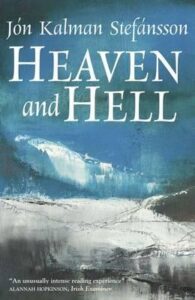
Heaven and Hell (Himnaríki og helvíti)
The sorrow of angels (Harrmur englanna)
The heart of man (Hjarta mannsins)
These three books hit me like nothing else in Scandinavian lit – and I love that literature already.
Stefánsson writes like the words are carved out of the Icelandic wind: dense, rhythmic, almost exhausting at times, but so full of weight that you can’t look away. The landscape is the background, and it’s alive, harsh, beautiful, fire and ice all at once. It mirrors the people fighting to survive in it.
What really got under my skin is the narration, that ‘we’ voice, collective, raw, no hiding. It’s like the whole community is speaking through one mouth, sharing the pain, the endurance, without any comfort. No easy outs.
The stories move like a storm: loss, grief, small battles every day, and it doesn’t spare you. But when it finally lets go, there’s this catharsis, hard-earned, real. You feel changed, a little lighter, a little wiser about how close heaven and hell really are in everyday life.
If you want literature that demands something from you and gives back tenfold, dive into this trilogy. It’s poetry in prose, and Iceland has never felt so close – or so unforgiving
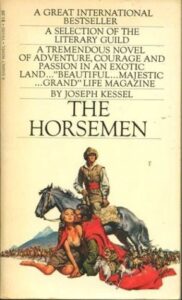
JOSEPH KESSEL
The Horsemen (Les Cavaliers)
For anyone who has immersed themselves in the pages of The Horsemen, Joseph Kessel’s work is not just a novel, but a physical experience. Although Kessel was not Afghan, he managed to unlock the code of honor of a culture that was then unknown to the West, far from tourist romanticizations.
Buzkashi left a deep impression on me. The description of this violent, real tradition, of horsemen fighting on horseback over the carcass of an animal, is shocking, raw. It reveals endurance, pride, and the feeling of belonging more than being owned. You belong to the steppe and to a tradition that has been carved out by survival.
The novel is the story of a father and a son. Of pride pushed to the limits of self-destruction, of a legacy that seems as heavy as destiny. Tradition here is represented by the harsh, irrevocable code of honor of the nomads. There is no room for weakness or evolution. A man’s worth is measured solely by his endurance and dominance over horses and nature.
The elderly father, although he loves his son, envies his youth and his ability to achieve a glory that he himself can no longer claim. And the son, who lives in the shadow of his father, must struggle with his failure and the betrayal of family honor that makes him “unworthy” in the eyes of his own people.
Read it like an epic. That’s how I felt.