
Every story has roots.
Every character carries a truth. Every tale is someone’s reality.
Welcome to the pages behind VENTHŌS
✦
Author’s note
Some stories do not begin with an idea, but with a reality.
I began writing Al Tira in July 2022 and completed it ten months later, long before the events of 7th October 2023. And yet, in ways I could not fully articulate at the time, the story was already shaped by the same questions, about fear, belief, and what remains of our humanity under the constant threat.
There was no single moment of inspiration. Al Tira emerged from looking closely at my own life, not at imagined desires, but at the forces that truly shaped me. I wanted to speak honestly. To give shape to an inner landscape formed by memory, inheritance, and values passed down through generations.
Much of this story is rooted in what I learned from my parents: not through ideology, but through example. Through resilience without hatred. Through strength that did not harden into bitterness. Through the belief that understanding and compassion are not weaknesses, even or especially in times of fear.
Al Tira is more than a thriller. It is an exploration of what it means to remain human when certainty becomes dangerous, when silence feels safer than speech, and when fear demands obedience. It asks how identity is shaped, how loyalty is tested, and where personal responsibility begins in a world that constantly pushes us to look away.
This story was written as an act of refusal. A refusal to let fear have the final word.
AL TIRA – Fear not
I was raised in a home where identity was never a label, but a responsibility.
Where people were measured not by origin, religion, or nationality, but by the kind of human being they chose to be.
I was taught to be proud of my roots — Greek and Jewish — not as a claim of superiority, but as an inheritance of history, thought, and endurance.
A reminder that values come before borders, and humanity before names.
On the way back to the hotel, I locked my mind. I had learned how to do that, how to seal pain away, the way I had learned to survive prejudice without letting it define me.
I carried the truth through the motions of the day, undressing, showering, drinking without tasting, until sleep finally took me, fully dressed in a borrowed calm.
Some realities are too heavy to be understood all at once.
So we close the door. Just long enough to breathe.
The call to prayer rose through the evening air, and we stood there in silence, held together by sound rather than words. He did not belong to the ritual.
He belonged to respect, for life, for difference, for belief without obedience.
“We look for gods,” he once said, “to carry what we cannot. But we are also responsible for what we allow to shape us. But it is inside us that both light and darkness live.
What we become depends on which one we choose.”
My enemy is fundamentalism, wherever it comes from. Blind. Inhuman. Destructive. I do not act to destroy indiscriminately, but to prevent. To protect what fanaticism seeks to erase.
I want peace. But I also want a world where it is still possible to live without fear.
Some battles multiply the moment you engage them.
And still, you fight, not because you expect an end, but because surrender is not an option
“Fear is inevitable. It exists whether we acknowledge it or not. But fear has no power on its own.
It only grows when we permit it, when we surrender to it.
I have never allowed fear to become larger than me. I keep it close, contained, measured.
Fear does not weaken me. It sharpens me“
✦
Music & Atmosphere
A curated soundscape that echoes the inner world of Al Tira — restraint, memory, tension, and the quiet weight of choice.
✦
Find yourself in the characters
Every story carries a reflection of someone — sometimes, it’s us.
Ester Navarro – Choosing Humanity
Ester Navarro was raised within a clearly Jewish environment, shaped by both her parents’ heritage, yet never enclosed by it. What defined her upbringing was not dogma, but openness. Freedom of thought. A lived example of coexistence, reinforced by her parents’ close friendship with an Egyptian Muslim couple. A bond that existed not as a statement, but as a fact of everyday life.
From early on, Ester learned to recognize and accept people not by belief, religion, or cultural background, but by character and principle. Difference was never something to be tolerated; it was simply part of the world she inhabited.
Those same principles, however, also made her cautious. They shaped a critical distance toward the political realities she observed in Israel, not out of rejection, but out of ethical unease. She questioned power. She questioned the policy. She questioned what fear can justify when it becomes permanent.
What altered her perspective was not ideology, but proximity. When she looked beyond the surface of political decisions and into the deeper, existential fear surrounding the very existence of the state, many of her certainties began to shift. Understanding did not erase disagreement, but it complicated it. It replaced judgment with context.
Ester is deeply grounded in her identity. Proud of the Jewish and Greek lineage she carries, fully aware of the history embedded in it. At the same time, she lives in her own body the experience of racism and antisemitism. Not as an abstract concept, but as a recurring reminder that identity is often imposed before it is chosen.
She does not respond to this with bitterness. She refuses to mirror hatred back to its source. This refusal is not weakness; it is conviction. A conscious decision to protect her humanity rather than surrender it to fear.
Loyalty defines her. To her friendships. To the people she loves. Though she moves through the world as an ordinary citizen, gentle, uncomplicated, without power, she does not hesitate to step into danger when those she cares for are threatened. Courage, for her, is not a posture. It is instinct.
She is intelligent, extroverted, and highly capable in her work. She believes in individual freedom, the right of every person to define themselves without coercion or inherited guilt. That belief, however, does not make her naïve. Ester makes mistakes. She misjudges. She trusts when she should hesitate. But even her errors stem from the same source: an insistence on seeing the human before the label.
In Al Tira, Ester stands as a quiet counterpoint to extremism. Not because she is untouched by violence or prejudice, but because she chooses not to let them define her response. She embodies the idea that identity does not have to harden into defense, and that remaining open, in a world that constantly demands closure, can itself be an act of resistance.
Ari Davidson – Discipline as a Form of Love
Shaped by repeated violence and irreversible absence, he does not turn toward revenge. Instead, his world contracts inward, into discipline, restraint, and an uncompromising sense of responsibility. Where others might seek destruction, Ari chooses containment. Protection. Control.
Raised in an environment that valued education, freedom of thought, and ethical clarity, he learned early that strength is not measured by force, but by the limits one places on it. Loss did not erode those values; it refined them. It taught him that rage may feel immediate, but it is responsibility that endures.
Ari is not outwardly warm. He is reserved, guarded, and often severe. He speaks little, observes constantly, and thinks several steps ahead of everyone else in the room. Humor rarely reaches him. Trust is given carefully. Yet those who stand close to him understand something essential: his silence is not indifference, it is vigilance.
Service, for Ari, is not ideology. It is an obligation. He carries leadership as weight, not privilege. Every life under his command is counted, and every loss is borne as personal failure. His moral compass is unyielding, not because it is rigid, but because it has been tested beyond negotiation.
He does not seek recognition. He operates in the margins, where decisions are made quietly, and consequences are absorbed without applause. His loyalty is precise and unwavering, to those he leads, to those he protects, and to the principles that anchor him when certainty collapses.
What sets Ari apart is not his capacity for violence, but his refusal to let it define him. Even when fully capable, even when trained for it, he remains guided by restraint. His strength lies in choosing defense over annihilation, protection over spectacle.
When faced with the ultimate choice, whose life carries the risk, Ari does not hesitate. He steps forward instinctively, not as a gesture of heroism, but as a continuation of who he has always been. For him, love and duty are not separate paths. They are the same line, drawn without compromise.
In Al Tira, Ari stands as a counterweight to fanaticism. A reminder that loss does not demand hatred as its conclusion — and that true courage often appears not as fury, but as quiet, irreversible resolve.
Darius el Masri – The Courage of the Untrained
Darius belongs to the same moral world as Ester.
He was raised with openness, kindness, and a deep respect for human dignity, shaped not only by his own parents but also by the values of the family that welcomed him as their own. Love, loyalty, and decency were not ideals for him; they were lived realities.
He moves through life without ideological armor. Without political obsession. Without the constant tension that defines others around him. He loves his homeland quietly, without slogans or absolutism, a love that draws him toward history, culture, and preservation rather than conflict. His choice to become an archaeologist reflects a desire to understand where people come from, not to decide who belongs.
Darius is not driven by ambition or power. He follows his dreams with innocence, even when luck seems to hand him more than he expects, including love. Like many people, he misjudges. He allows desire to cloud caution. Not out of greed or malice, but because he believes the world is fundamentally safe.
What draws him into darkness is not ideology, but fear. Fear for the people he loves. Fear of loss. Fear of being unable to protect those who matter most. Without the tools, training, or experience of someone like Ari, Darius finds himself trapped between moral instinct and human vulnerability.
Yet when a path opens, when choice returns, he does not hesitate. Darius risks his life not to redeem himself, but to prevent catastrophe. His courage is not tactical or rehearsed; it is raw and unpolished. It comes from conscience rather than strategy. And when he realizes that Ester knew of his involvement, shame follows. It is not because he was exposed, but because he understands he fell short of the person he wanted to be.
He is not weak. He is unarmed.
In Al Tira, Darius represents the fragile space between goodness and fear. A reminder that integrity is not defined by the absence of mistakes, but by the willingness to act when it finally matters, even at great personal cost.
Malik Manyar – When Loss Becomes Certainty
Manyar is not presented as evil by nature. He is presented as a man shaped by experience.
In Al Tira, his trajectory raises a question rather than offering an answer: how much of what we call extremism is inherited, and how much is learned? How much is ideology, and how much is the result of loss, humiliation, and accumulated rage?
He is a man who loved and protected his family. A father who remained present. A provider. Someone capable of care and responsibility. These facts do not cancel his actions, but they prevent him from being reduced to a single dimension.
Manyar stands at the point where grief hardens into certainty, and certainty turns into justification. His violence is not chaotic; it is deliberate, absolute, and stripped of exceptions. What makes him dangerous is not blind hatred, but conviction, the belief that destruction can restore balance, that fear can be answered only with fear.
The novel does not ask the reader to excuse him.
It asks something more unsettling: whether, under different circumstances, his life might have unfolded differently.
This question becomes sharper when placed beside Ari. Both men are shaped by loss. Both are formed in environments of conflict. Yet where one chooses radicalization and annihilation, the other chooses restraint and defense. Their contrast suggests that neither genetics nor birthplace alone determines the path a person takes. Experience and personal values do.
Manyar exists in Al Tira as a reminder that extremism is not born in isolation. It is cultivated, slowly, persistently through lived realities that narrow the world until only one outcome feels possible.
And that is precisely why he cannot be dismissed as a monster.
Because monsters are easy to reject.
Humans are not.
On Inheritance
Some values are not taught through instruction, but through presence.
Ester’s moral compass did not emerge from ideology or doctrine. It was shaped by people who had every reason to harden, and chose not to. By a generation that carried unimaginable loss, yet refused to pass bitterness forward.
The most enduring lesson she inherited was not survival, but restraint. Not memory as grievance, but memory as responsibility. The understanding that dignity is not selective, and that equality loses its meaning the moment it becomes conditional.
This inheritance does not explain Ester’s choices. It simply makes them possible.
✦
Topography
The places that shaped the story — where it was written, remembered, and lived.
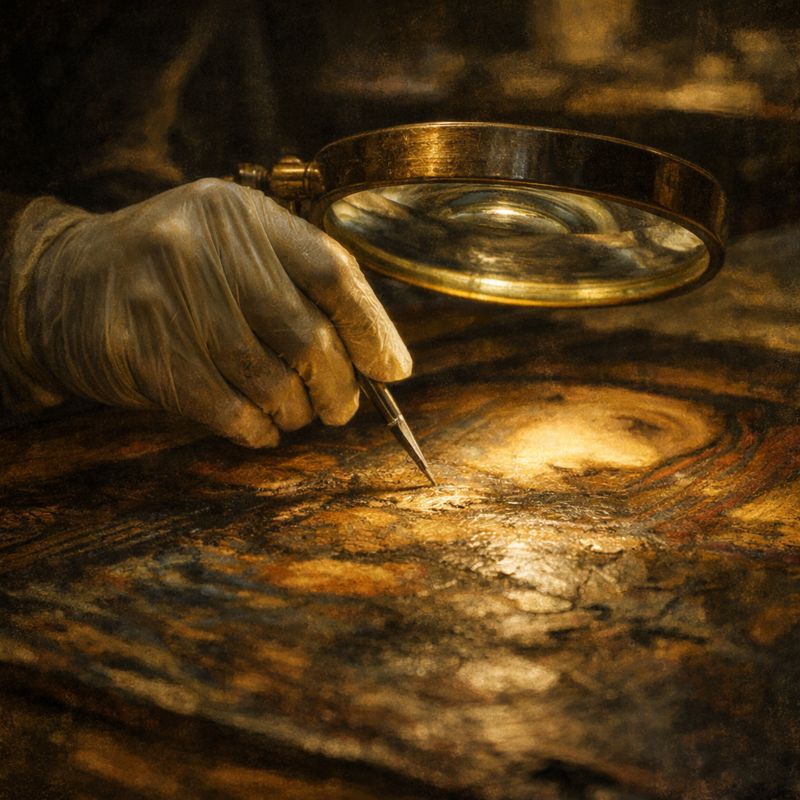
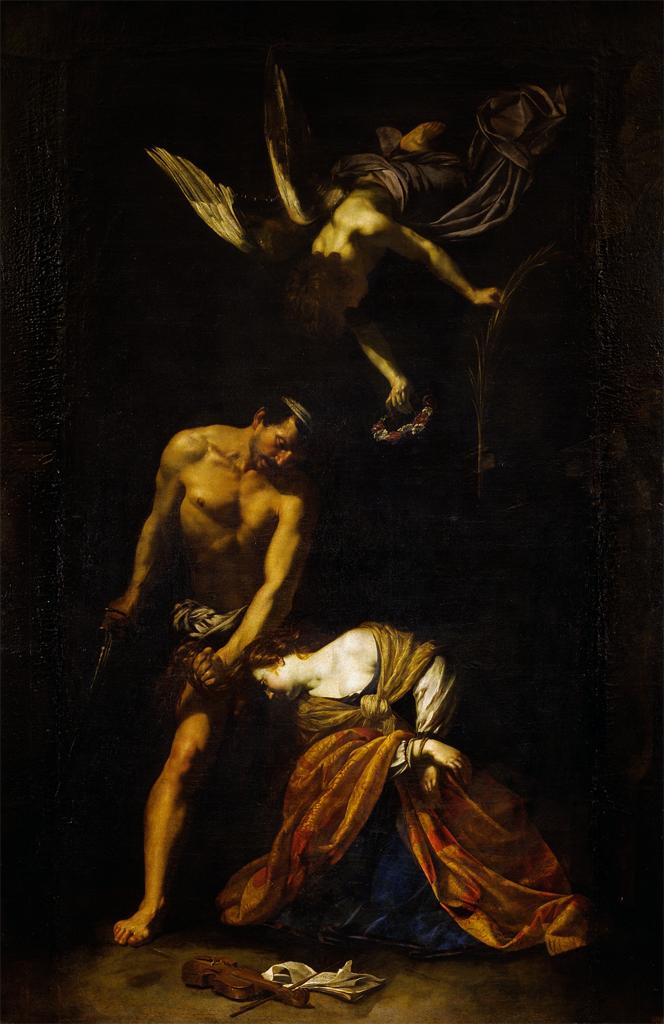
Working on the Details: The Martyrdom of Saint Cecilia by Orazio Riminaldi
In Florence


In Cairo


In Damascus
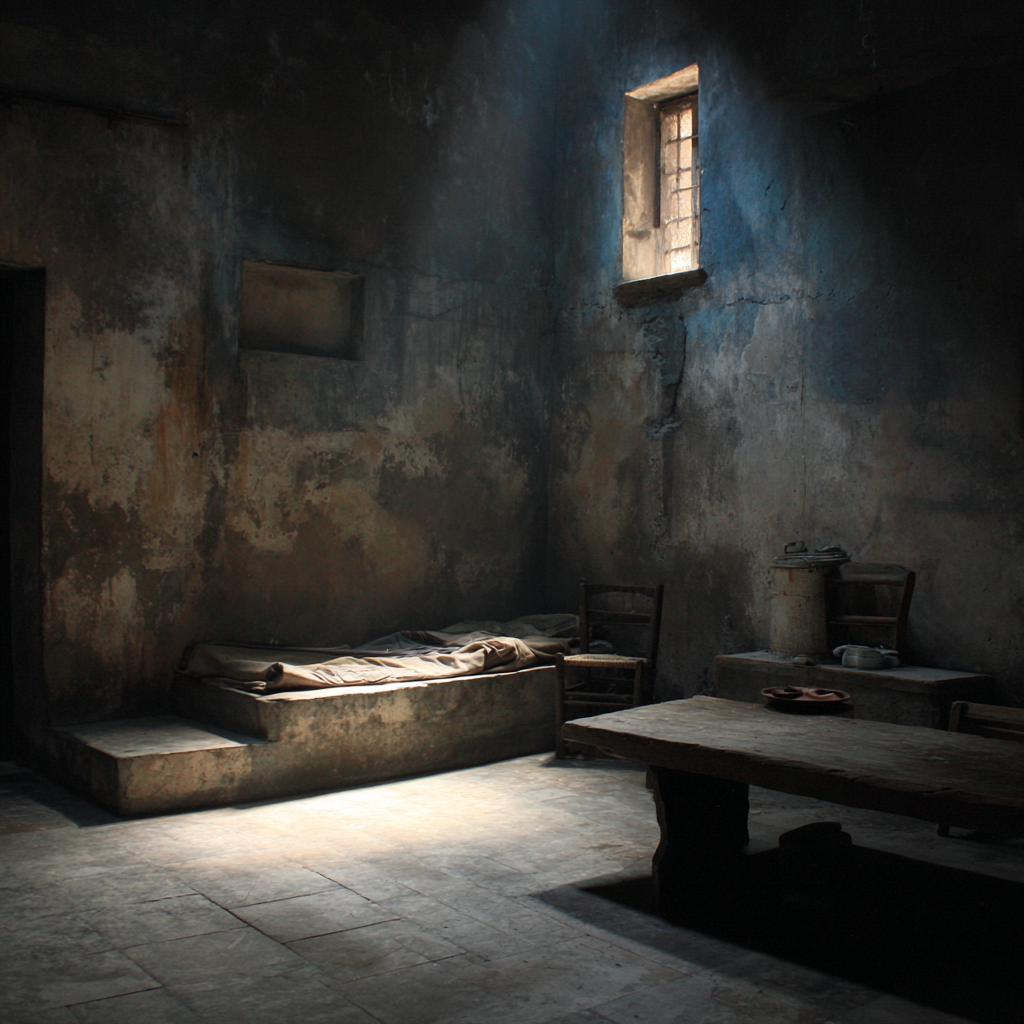

In Bruges